
Parents of disabled and special needs children live at the intersection of caregiving, advocacy, employment, and self-preservation. These parents are not a niche group—they are working professionals, entrepreneurs, hourly workers, and students who carry dual responsibilities that rarely fit into standard life advice. Balancing personal life with professional goals is not about “doing it all.” It’s about designing a life that can flex without breaking.
The real tension parents face
Caring for a child with disabilities or special healthcare needs often means unpredictable schedules, emotional labor, and systems navigation that most workplaces are not built to accommodate. Career ambition doesn’t disappear—but time, energy, and certainty do. The challenge isn’t lack of motivation. It’s friction.
What helps most is not heroic effort, but intentional tradeoffs and structures that reduce decision fatigue.
What actually helps (in plain terms)
Think in seasons, not weeks. Some months your child needs more. Other times, your career does. That rhythm is normal.
Designing a career that bends instead of snaps
Instead of forcing a traditional ladder climb, many parents find success by rethinking how they grow professionally.
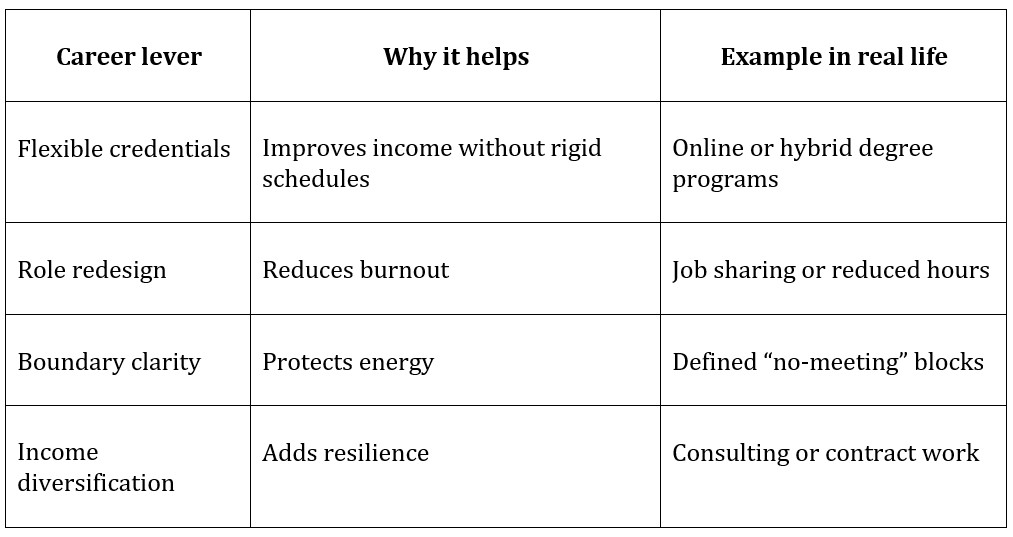
Careers that allow autonomy—healthcare, education, remote-first roles, skilled trades, or independent work—often provide more long-term sustainability than prestige-driven paths.
Education as a strategic pivot (not an escape hatch)
For some parents, returning to school is not about starting over—it’s about gaining leverage. Advancing your education can open doors to roles with better pay, more flexibility, and greater control over your schedule.
For example, earning a graduate nursing degree can expand career options into leadership, education, informatics, or advanced clinical roles. Many parents choose online programs because they allow learning to happen around caregiving and work commitments rather than in conflict with them. Exploring the benefits of an MSN can help parents evaluate whether this path aligns with their professional goals and family realities.
The key is choosing education that reduces long-term strain—not adds to it.
A practical reset checklist
When things feel unmanageable, step back and recalibrate using this short how-to guide:
- 1
Audit your energy, not your hours: Track what drains you versus what sustains you for two weeks.
- 2Name your non-negotiables: This might be medical appointments, rest time, or income minimums.
- 3Redesign one role at a time: Don’t overhaul everything—start with work, then home, then self.
- 4
Ask for accommodations early: Employers respond better when needs are clear and proactive.
- 5
Build slack into every plan: Assume disruptions will happen—and plan for them.
This approach turns survival into strategy.
Frequently asked questions
Is it selfish to prioritize my career when my child needs so much?
No. Financial stability, fulfillment, and mental health directly benefit your child.
What if my employer isn’t supportive?
You may need to explore alternative roles, departments, or organizations that value flexibility. That’s not failure—it’s alignment.
How do I deal with guilt?
Guilt is common, but it’s not a reliable decision-maker. Focus on impact, not perfection.
Can I still grow professionally at a slower pace?
Yes. Sustainable growth often outperforms rushed progress in the long run.
One resource worth bookmarking
Family Voices is a national organization that supports families of children with special healthcare needs by offering advocacy tools, peer support, and policy guidance. Their materials help parents navigate systems while protecting their own wellbeing.
Closing thoughts
Balancing personal life and professional goals as a parent of a disabled or special needs child is not about finding a perfect formula. It’s about building a life that absorbs pressure without collapsing. Progress may look different, slower, or quieter—but it’s still real. With the right structures, support, and flexibility, both your family and your ambitions can grow together.
This article was written by guest author Marcus Lansky